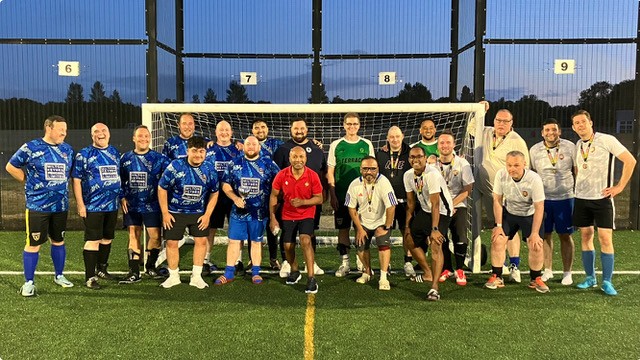
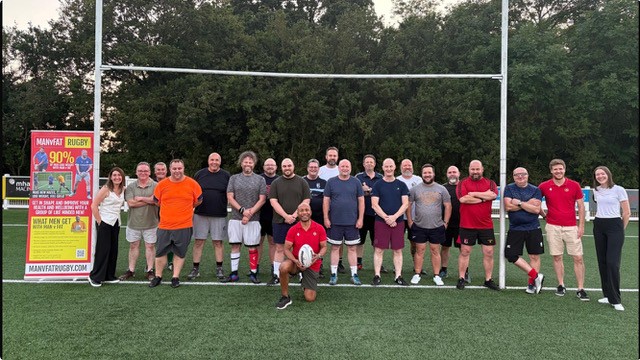
Men across Bedford and Milton Keynes have been benefiting from the expertise of MAN v FAT Health & Wellbeing Coach Dave Griffith, as he lends his knowledge to both our football and rugby communities.
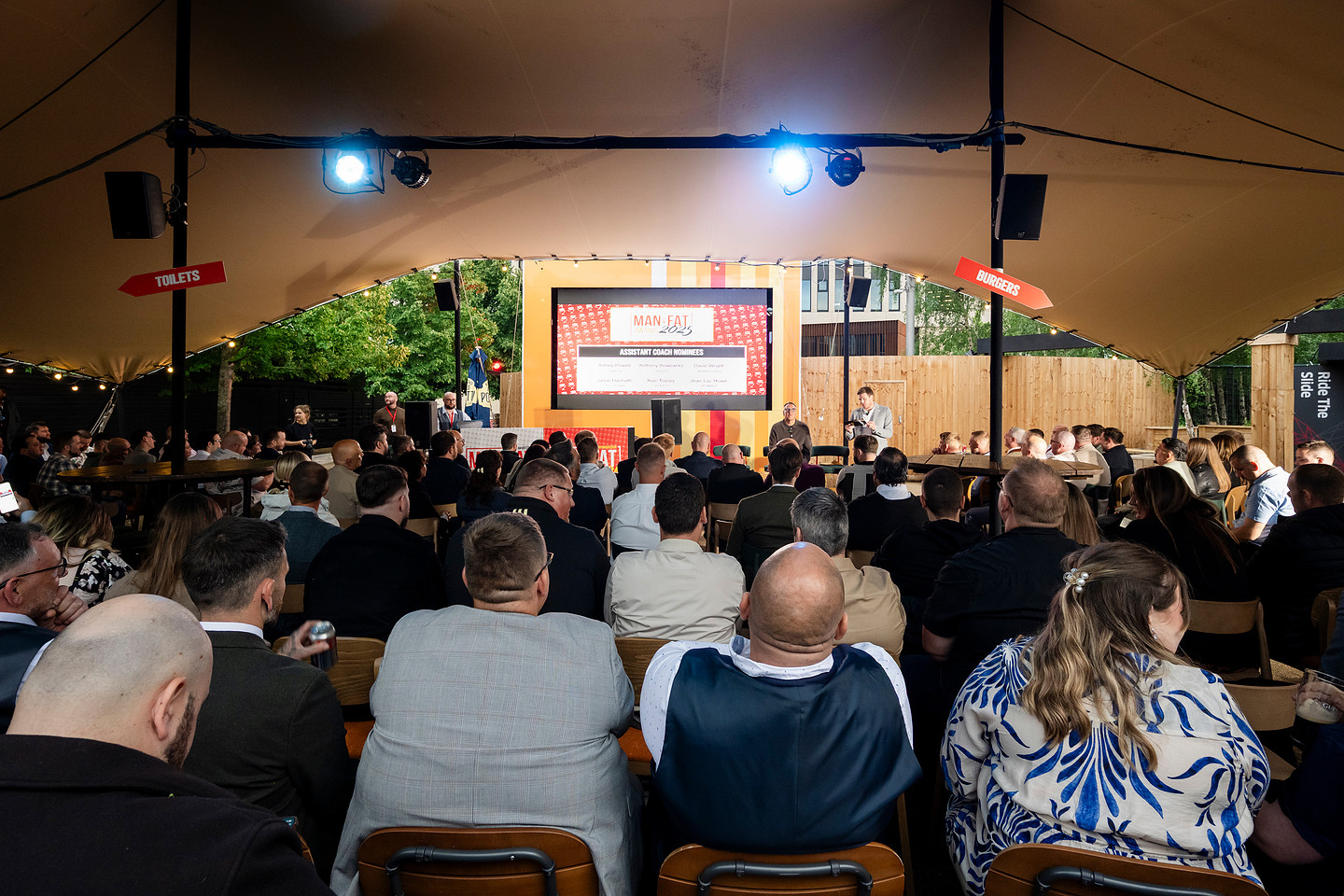
Dave’s hard work and successes in his two clubs – the established Football club in Milton Keynes and the fledgling group in Bedford Rugby – has seen him shortlisted for Coach of the Year at this year’s MAN v FAT Awards, so we caught up with him to find out more.
Tell us a bit about your background in coaching and your specialism in this area
I have an unconventional background in coaching. It began while working in a profession that included a lot of international travel, time changes, disrupted sleep and inconsistent food choices. Observing my own experience, I began a period of self reflection and introspection, examining my own situation with regard to mindset, nutrition, sleep and fitness, gradually developing effective strategies to cope with my daily challenges.
Having studied Social Sciences and Psychology, I have a lifelong fascination with society, relationships, human behaviour and the mind. My particular interest is Positive Psychology, which is grounded in what is working with regards to our behaviour, rather than what is broken. This emphasis on character strengths, purpose and resilience forms the background to my coaching style, working together to build
confidence, develop skills, and provide support to those seeking positive change.
After further study, completing courses in Nutritional Advice, and Sleep CBTi, I began by working with colleagues, focussing primarily on improving nutritional choices, and introducing better sleep techniques,as well as championing the merits of regular exercise.
I was privileged to have been involved in the MEND (MIND, EXERCISE, NUTRITION, DO IT!) project when it was first rolled out in my local area. The purpose of the twice weekly course, delivered over a 10 week
period, was to provide support for children between the ages of 7 and 13 and their families, to achieve and maintain lasting healthier lifestyle behaviours.
The team was tasked with encouraging families to be more physically active, as well as learning that healthy food and drink choices can be nutritious, affordable, as well as delicious. The results from the programmes that I delivered were simply staggering, with both parents and children benefitting from weight loss, and improvements in self-esteem.
What attracted you to become a MAN v FAT coach in the first place?
I have always had a passion for sport, and in particular have a lifelong love of football and rugby. I am also passionate about men’s health, because the stark reality remains that men continue to have a higher mortality rate than women, dying almost four years younger and facing higher rates of cardiovascular disease, cancer, diabetes and death from suicide.
It is essential that we take steps to reverse these alarming trends by tackling high profile risk behaviours, such as excessive drinking, smoking, and drug dependency as well as poor diet and lack of exercise.
I am an advocate of encouraging men to see seeking help as a strength rather than a weakness, and encourage them to routinely visit a GP, and to be proactive with regards to specific health risks, such as prostate cancer. Reducing the stigma around mental health is also essential, and it is important to start the conversations that keep lines of communication open.
What have you enjoyed most about coaching at MAN v FAT?
Each player involved in the programme has a unique story, and begin their MAN v FAT journeys from different levels of confidence, fitness, knowledge and ability.
Supporting each player from the outset as they settle into the swing of things, making them comfortable, and understanding their specific needs and learning style is always an important element of the bedding in process. By engaging in non-judgmental open and honest dialogue, either with myself, a teammate, or through the team chats, players usually embrace the positive culture of their peers, and strive for improvement.
Empowering these incredible men to take better control of their health, while doing something that they enjoy, and having a laugh and a joke along the way, is incredibly rewarding and inspiring.
- Sign up for MAN v FAT Football in Milton Keynes | Visit www.manvfatfootball.com
- Sign up for MAN v FAT Rugby in Bedford | Visit www.manvfatrugby.com
What impresses you most about the men you support in the programme?
The biggest thing for me, is the level of mutual support that these amazing men demonstrate towards each other. The camaraderie and respect is extraordinary, as well as their commitment and determination to rise to challenges. The resilience that I witness on a weekly basis is truly awe inspiring.
What are the main differences you’ve noticed between the Rugby and Football communities you look after, and what themes run true through both programmes?
Having begun my MAN v FAT coaching experience at the established club of Milton Keynes, competition and team rivalry was embedded in the weekly football fixtures. The strong desire to win on the pitch is a
theme that continues, and no quarter is given on match days. This doesn’t however diminish the strong camaraderie and supportive nature of players relationships off the pitch.
Coaching Bedford Rugby from its inception, I have had the privilege of seeing both the club and the players evolve. Still in the development stage as a club, with growth of numbers a priority, the current players place less emphasis on the results on the pitch, focusing instead on the enjoyment and satisfaction that they get from these sessions. With one player stating at a recent session “this is the highlight of my week”.
The common theme that runs through both of these programmes is the engagement, commitment and determination of each group to make meaningful and positive sustainable changes to their lifestyles.
Mutual support is also strongly represented across both sports, with many players meeting socially, training together at the gym, or walking together. Both communities are acutely aware that simply turning up and playing every week, isn’t sufficient, but the characteristic of showing up with candour and openness about the triumphs and challenges of the week underlines the strength of the players commitment.
Banter and humour is also an invaluable asset, keeping spirits high, on a cold wet evening, or disarming awkward situations.
You are one of the most experienced coaches on the new look system, having used it for Rugby previously. What difference do you think it will make to coaches and players as the Football programme fully migrates across?
The new look system is an improvement on its predecessor. From a coaches perspective, it allows access to all of the relevant information easily and effectively, seamlessly moving from one section to another.
The individual player information is concise and helpful, displaying stats and player milestones together in one place, which is particularly useful when chatting with a player. The roundup tab is a godsend, listing all of the important weekly information in one place, making my weekly club roundup less complicated to compose.
Players from Rugby and Football have nothing but praise for the new system. The Player Portal has been universally accepted as a noticeable upgrade to the old weekly email system. Players are impressed with the level of detail and amount of information at their fingertips.
Although I am only in week four of the new system at Milton Keynes, the improved system is indicating enhanced player engagement and accountability.
The English Government launches its Men’s Health Strategy in 2025 – what do you think are the main priorities for men’s health in the coming years?
Improving healthy life expectancy of men, by focussing on reducing the drivers of CVD, such as high blood pressure, excessive alcohol consumption, smoking, drug abuse and obesity.
Reducing the stigma around Mental Health and make it easier to for men to reach out to counsellors and mental health professionals.
Encourage men to be empowered and confident to reach out and ask for help rather than suffering in silence when they have a problem. It is essential to put the right support where it matters, so that it is not only accessible, but also effective – an App isn’t always the best solution!