Reaching midlife brings its own challenges, both for men and for women.
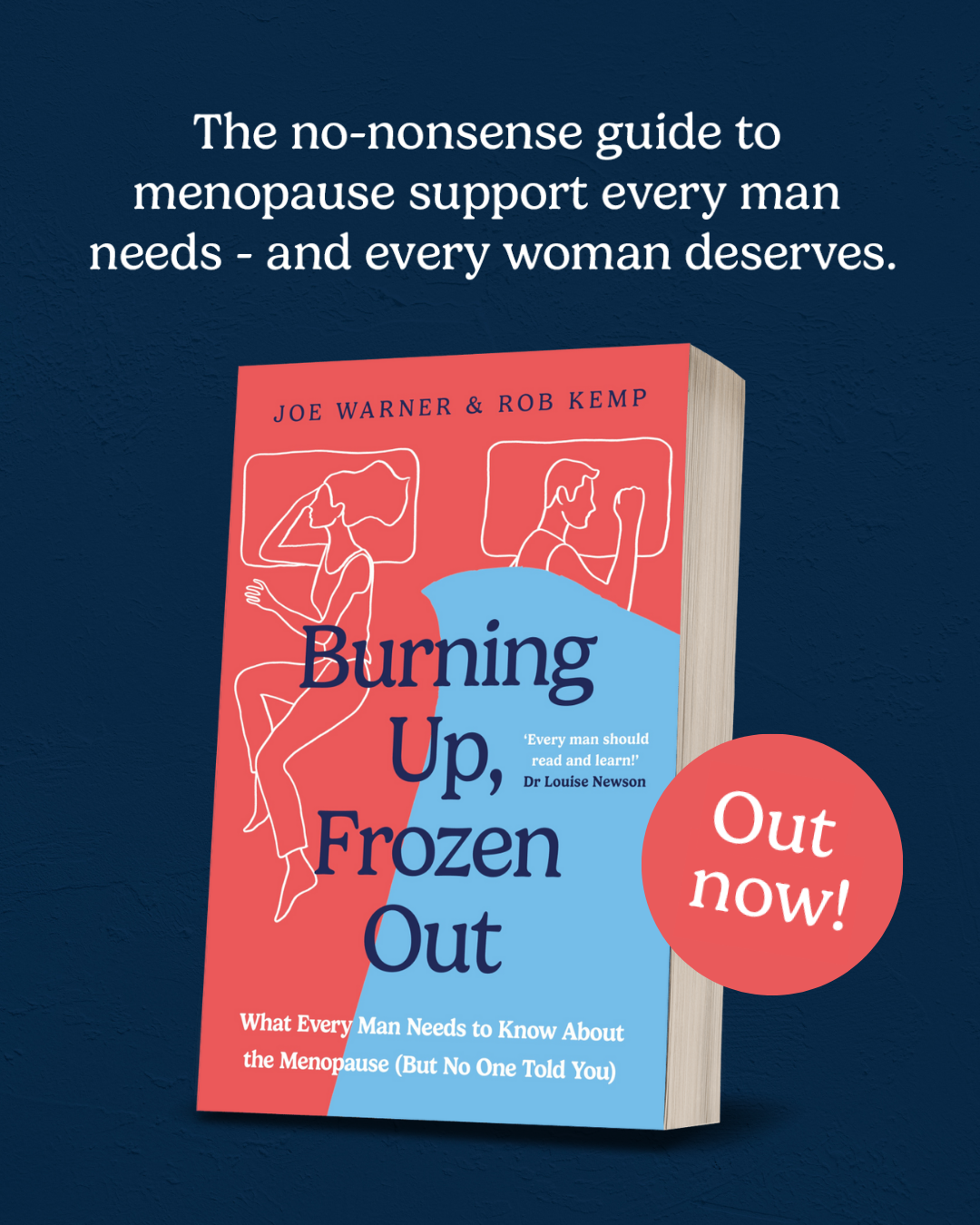
A new book released earlier this year tackles the subject of menopause and has quickly become a crucial book for blokes aiming to understand menopause and to support the woman in his life through that life change.
The book also aims to help men strengthen their relationships at a time where connection matters and to make their way safely through their own challenges at the same time.
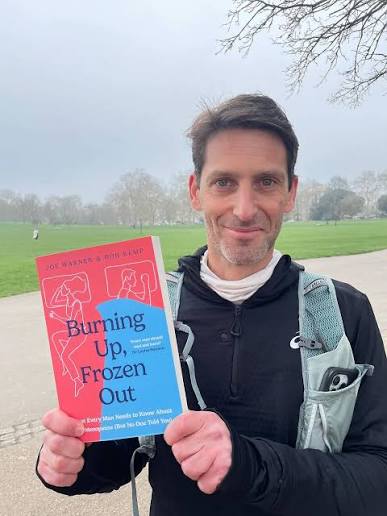
We caught up with author Rob Kemp to find out more about the book.
What was it that brought you to write the book in the first place? Was it cathartic to put it together?
I’d worked with Joe on and off for over 20 years in men’s health and fitness journalism. He came to me with the idea of a book, based on a similar format to the Expectant Dads and New Dads books I’d written, on the subject of the menopause. Both of us had different experiences of it, coming at it from different age ranges, but both of us had been clueless at first as to what it entailed and its impact on male partners, husbands, son, colleagues etc of women experiencing perimenopause.
It was cathartic in that it was useful to talk through the experience again with my wife, and with other couples, and spot themes within relationships. Researching its symptoms and its vastly different impact on one woman to the next – and their partners – was quite fascinating too.
The science around midlife and hormonal changes for women and men was really interesting, I think it’s possibly one of the most useful aspects of the book in terms of practical application for both males and females. There’s a lot of useful expert-led info for men and women aged 35 and beyond to help them manage changes in their bodies and their relationships.
What do you think are the main challenges facing men in modern society?
Personally I feel like the main challenge facing men is being men. Despite the drum banging that the likes of Men’s Health etc have been doing since the mid-90s male physical and mental health is still in a desperately poor state.
Life expectancy in males is still piss-poor in the west and the numbers around suicide, drug and alcohol dependency, domestic violence and mental health among prison populations tell their own story.
Admittedly the medical profession hasn’t always been as supportive of men as it could be, and the role of men in modern society has changed in comparison to our grandfather’s generation for sure, but it’s also our inability to speak up, challenge preconceived ideas around masculinity, take control of our health and prioritise our well-being ourselves that are really kicking us in the nuts.
Myself and Joe have also been working on a new book aimed at the parents of adolescent boys and it’s clear from the experts we’ve spoken to that a crucial factor in determining how lives pan out for young men is the positive influence and day-to-day presence of a decent father/father-figure in their lives.
It sounds like a circle of doom I know, sorry, but today’s boys are predominantly being let down by the men they need most and so it feels like the challenges men face aren’t going away anytime soon.

How can men be better partners to their other halves? Among things like the Midlife MOT and Traffic Light list, what do you think are the best tools contained within the book?
Communication, communication, communication. It’s a theme running throughout Burning Up, Frozen Out. That failure to communicate feelings, concerns and the things we love about each other between couples can have a devastating impact on relationships, especially as we get older.
There’s a lot of good advice around conversations, being supportive, knowing what to say, and what not to say, not trying to fix her but knowing how to be there for her – along with some pretty useful stuff for blokes in addressing their own health concerns. The workouts and exercise advice are among the best tools there too.
Whilst men are getting better at tackling emotions and the challenges of life, where do you think they continue to fall short?
We’re still slow to address niggles, ailments, health concerns until they become a major burden instead of getting on top of things earlier. It doesn’t help that GP services are over stretched but we still need to take a leaf out of women’s books when it comes to confronting health issues.
There was a survey out just last month, of 2000 men, which found that half of men wait until symptoms become too difficult to ignore, only 1 in 10 seek medical advice right away and around a quarter of men suffer worse outcomes because they delayed getting a diagnosis.
The old mindset of ‘ignore it and it’ll pass’ and that we’re too tough to need help remains, and it’s costing us dearly.
How do communities like MAN v FAT provide an outlet for blokes to tackle their own issues to ensure they’re a more present and more supportive partner in their home life?
Great question. Aside from the obvious health conscious benefits and the mental health boost that comes with a bit of team camaraderie/piss-taking, for men supporting someone through menopause you need energy and an outlet yourself.
It isn’t just about understanding hot flushes or hormones, it’s about having the patience to listen, communicate calmly and cope with changing family dynamics.
If you’re healthier, sleeping better, exercising regularly and have an outlet for your own frustrations, you’re more likely to respond with empathy rather than frustration.
Also, as we get older, many men have very few close friendships outside work or family. I know from playing football myself still now in my mid-50s that projects like MAN v FAT create that regular opportunity to meet, laugh and talk without the pressure of a formal support group or the not-so-positive health implications of the pub.
If you could give one bit of advice to the men reading this, what would it be?
You can’t pour from an empty cup. If you’re stressed, isolated, exhausted or struggling with your own mental health, you’ve got less emotional bandwidth to support a wife/partner who is dealing with something as demanding as menopause. When you start looking after your own health, you become more patient, more energetic and more emotionally available. Look after yourself and that’ll benefit everyone at home too.
Want to read the book?
You can access the book for just £9.99 with this special MAN v FAT discount on the John Murray Press Library.
1) Visit https://library.johnmurraylearning.com/redeem
2) Enter code ‘MANVFAT’ to redeem get ‘Burning Up, Frozen Out’ for £9.99 and select “Apply”, checking that the appropriate discount has been applied.
3) Click go to cart. (If you are not signed in, you will be prompted to sign in/create an account.)
4) Click proceed and enter your chosen payment details.
5) Access your resource online via the website or download it to the accompanying John Murray Learning Library.
Offer valid from 1st August to 31st December 2026.
Please note: You will not be able to save the files to your computer.